
I belong to a generation of digital storytellers who picked up the craft long before the algorithmic race for short-form dominance took over our screens. While the world rushed toward TikTok, Instagram Reels, and high-production vlogs, I stayed true to the humble written word. Through my blog, “No Juan is an Island,” I have spent years documenting my travels, local food finds, and all the quiet life highlights in between.

People often ask me why I never made the leap to vlogging. The answer isn’t just about my comfort zone or a preference for quiet reflection over talking to a camera in a crowded street. At its core, the decision comes down to the mechanics of visibility and longevity: Search Engine Optimization (SEO).
When it comes to building a digital legacy that stands the test of time, written blogs possess distinct, structural advantages that video platforms simply cannot replicate.
1. Text is Native to Search Engines
At the most fundamental level, search engines are text-processing machines. When Google, Bing, or Yahoo crawl the internet, they read words, metadata, and structural code.
A blog post provides search engine bots with immediate, unambiguous context. Every keyword, internal link, heading tag, and alt-text description speaks the native language of the algorithm. While platforms like YouTube (owned by Google) have improved at parsing video transcripts and auto-generated captions, video content remains fundamentally opaque compared to a well-structured article.
When you write a blog post, you aren’t translating your thoughts into audio-visual data and hoping the algorithm interprets it correctly; you are handing the search engine a roadmap written in its own language.
2. The Power of Evergreen Longevity
One of the most exhausting aspects of the vlogging ecosystem is the relentless pressure of the content treadmill. Algorithms favor recency, frequency, and immediate engagement. A YouTube video or a TikTok reel experiences a sharp spike in views over 48 to 72 hours and then plummets into obscurity unless it goes viral.
Blogs, conversely, age like fine wine.
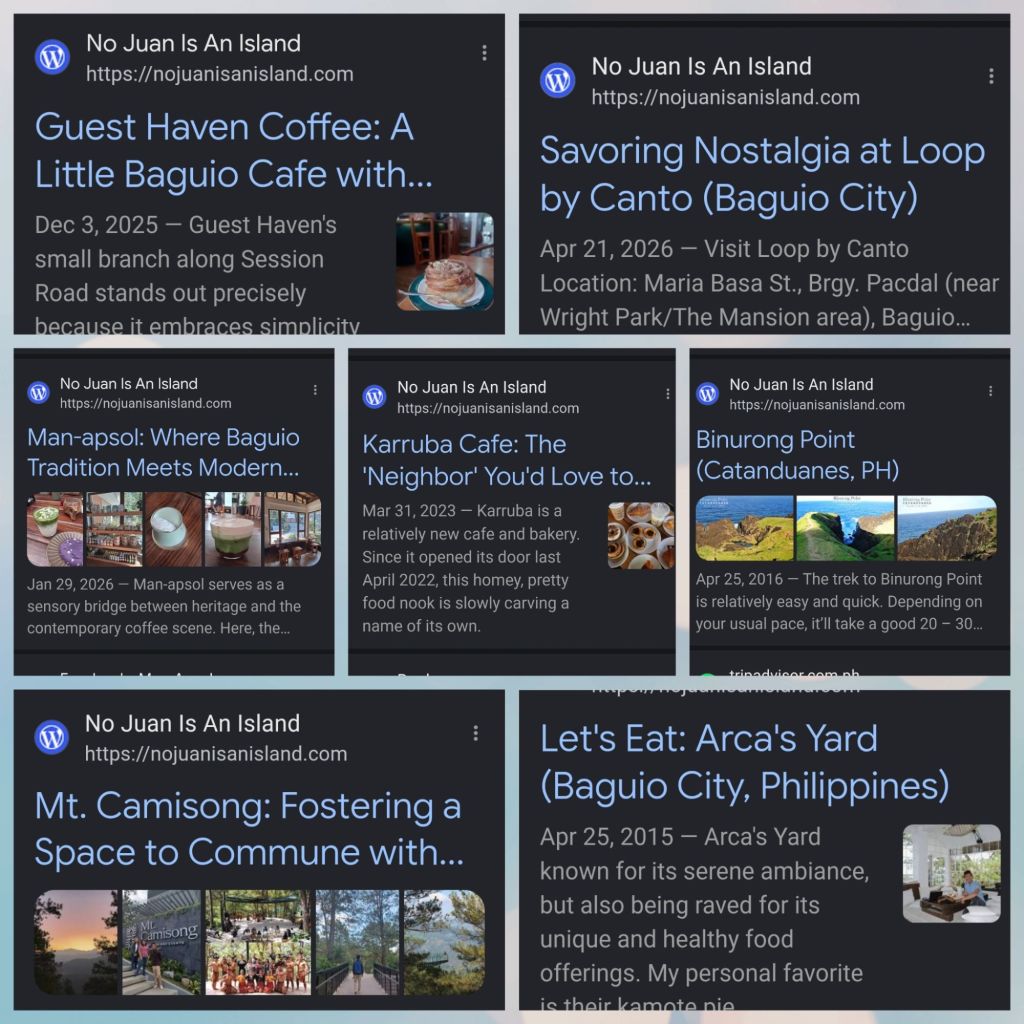
Because of strong on-page SEO, an article I wrote years ago about a remote travel route or a hidden culinary gem can still pull in steady, organic traffic day after day. Search intent remains constant: when someone types “best artisan cafes in Baguio” or a specific travel itinerary into a search bar months or years from now, Google serves up the most relevant and comprehensive answer—not the newest one. Written content compounds in value over time, while video content typically has a painfully short shelf life.

3. Granular Search Intent and Long-Tail Keywords
People use search engines differently than they use social media feeds. On social media, users are in a passive consumption mode, scrolling through endless entertainment. On search engines, users are on a mission—they are hunting for specific, actionable information.
This is where long-tail SEO shines. A vlogger might title a video “Exploring Northern Provinces (Epic Food Trip!).” It’s catchy, but it is broad and difficult to rank for.
A blog post, however, can naturally target hyper-specific long-tail queries like “where to find artisanal small-batch candles in the Cordilleras” or “a quiet three-day itinerary in Baguio during the rainy season.” By embedding these precise phrases into headings, bullet points, and natural prose, a blog captures high-intent readers who are actively looking for the exact depth of information only text can provide.

4. Reader Control vs. Forced Linear Consumption
SEO isn’t just about getting someone to click your link; it’s also about user experience (UX) and dwell time, which search engines track closely to determine page quality.
In a video, a viewer is locked into a linear timeline. If they want one specific detail—say, the exact operating hours or budget breakdown of a travel destination—they have to scrub through a 15-minute vlog or sit through mid-roll advertisements. If they get frustrated, they bounce.
A blog post respects the reader’s time. Through clear H2 and H3 headings, bullet points, and tables, a visitor can scan the page, extract the exact piece of information they need in three seconds, and stay on the page longer. This high dwell time signals to search engines that the content successfully answered the user’s query, reinforcing its search rankings.
5. Ownership and Algorithm Independence
While not a technical ranking factor, true SEO success is tied to digital independence. When you build on a vlog-first platform, you are renting space in an ecosystem governed by sudden policy shifts, changing monetization rules, and fickle algorithmic updates that can tank your reach overnight.
With an independent blog, you own your domain, your content structure, and your data. You control your site speed, your mobile responsiveness, and your internal linking architecture. You are playing the long game on a court you own, ensuring that your hard-earned search rankings belong to you, not a corporate platform’s shifting whims.

Final Thoughts
Vlogging has its undeniable magic—it captures movement, personality, and visceral audio-visual energy in a way text cannot. But for a storyteller who values depth, intentionality, and a permanent digital archive, blogging remains the undisputed king of sustainable reach.
Long after the viral trends of today fade away, the words we write today will continue to quietly guide curious travelers, hungry foodies, and wandering seekers right to our digital doorstep. And for “No Juan is an Island,” that enduring connection is worth every single typed word.














Leave a Reply